Why Bar Stations Work (And How to Set Them Up Without Lines or Confusion)
This post may contain affiliate links. As an Amazon Associate, I earn from qualifying purchases.
Bar stations work best when they remove friction — not when they try to replicate a full bar experience in a self-serve format.
When done well, bar stations encourage movement, reduce waiting, and let guests engage at their own pace. When done poorly, they create long lines, hesitation, and awkward bottlenecks.
This post breaks down how to design bar stations that feel effortless, intentional, and genuinely enjoyable for guests.
Why Bar Stations Work
Bar stations succeed because they decentralize service. Instead of everyone waiting at once, guests approach the bar when it feels natural in conversation.
They work especially well when: – drinks are meant to support social flow, not dominate the event – guests are arriving over a longer window – you want movement through the space rather than clustering
A well-designed bar station becomes part of the environment — not a choke point.
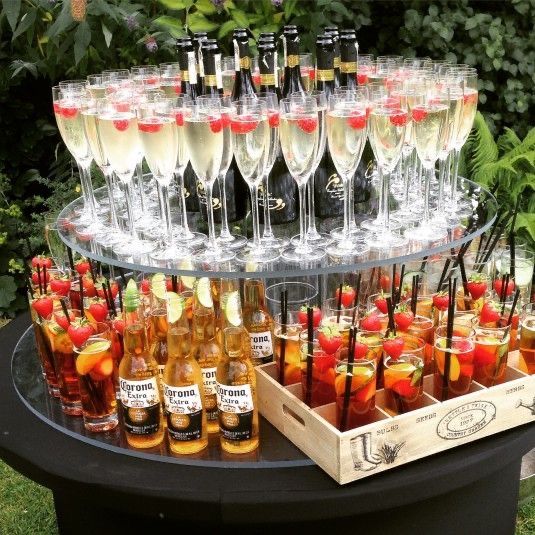
Common Bar Station Mistakes
Bar stations usually fail because of layout, not drink selection.
Common issues include: – too many bottles presented at once – unclear order of service (guests don’t know where to start) – garnish, ice, and glassware all competing for the same space
When guests hesitate, lines form.
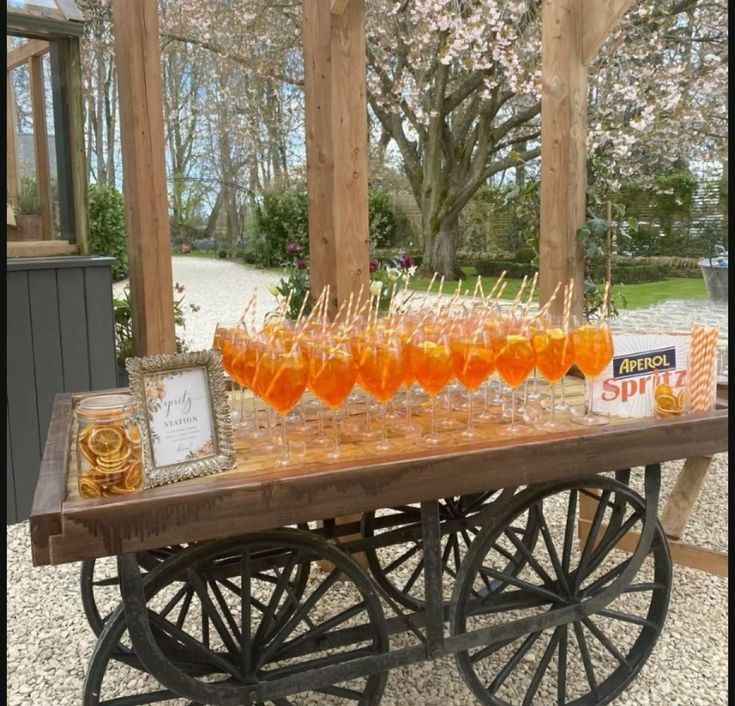
How to Set Up a Bar Station That Flows:
- Limit Choices Intentionally
Offer 1–2 signature drinks instead of a full open bar. Fewer decisions mean faster movement and less congestion. - Create a Clear Build Order
Set the station left-to-right or front-to-back: glassware → ice → base → mixer → garnish. - Separate Garnish + Ice
Garnishes should never be where guests stop to pour. Move them to the end of the station so people can step aside. - Add Exit Space
A small side table or clear counter space lets guests adjust drinks without blocking the next person. - Label Everything Clearly
Simple signage removes uncertainty and speeds flow.
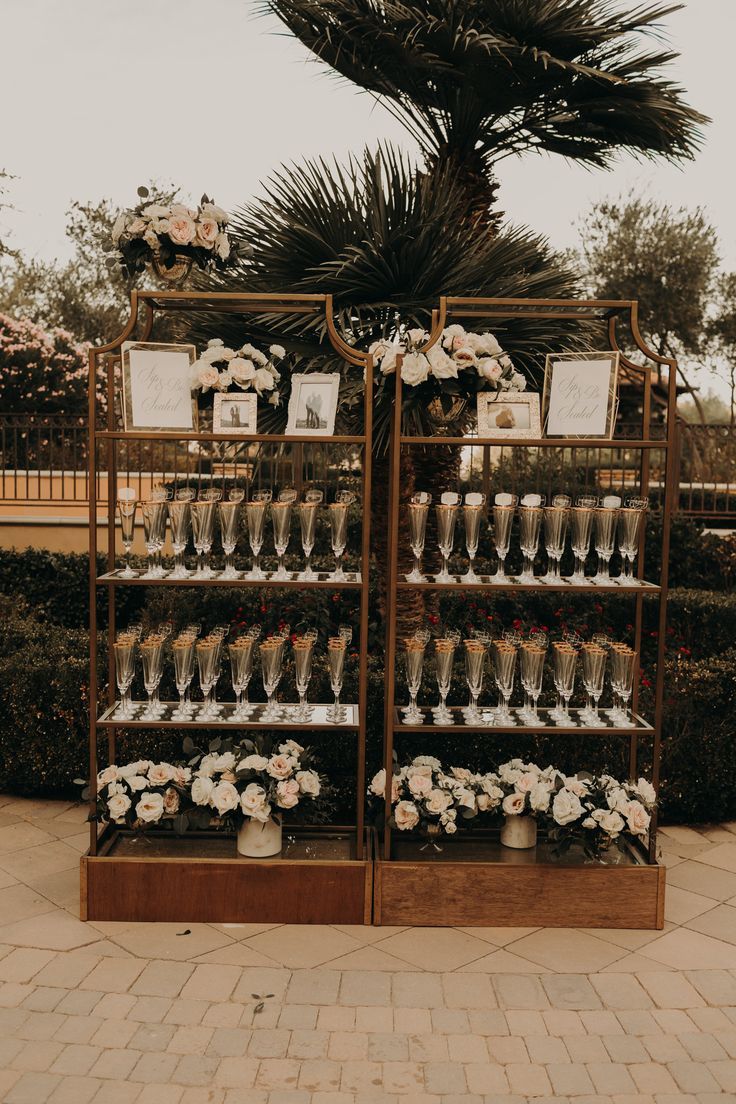
Example Bar Station Setup
- Slim beverage dispenser with a pre-batched cocktail
- Raised riser for bottles or mixers behind
- Ice bucket placed slightly off-center
- Garnish tray at the far end
- Small side table for napkins and stir sticks
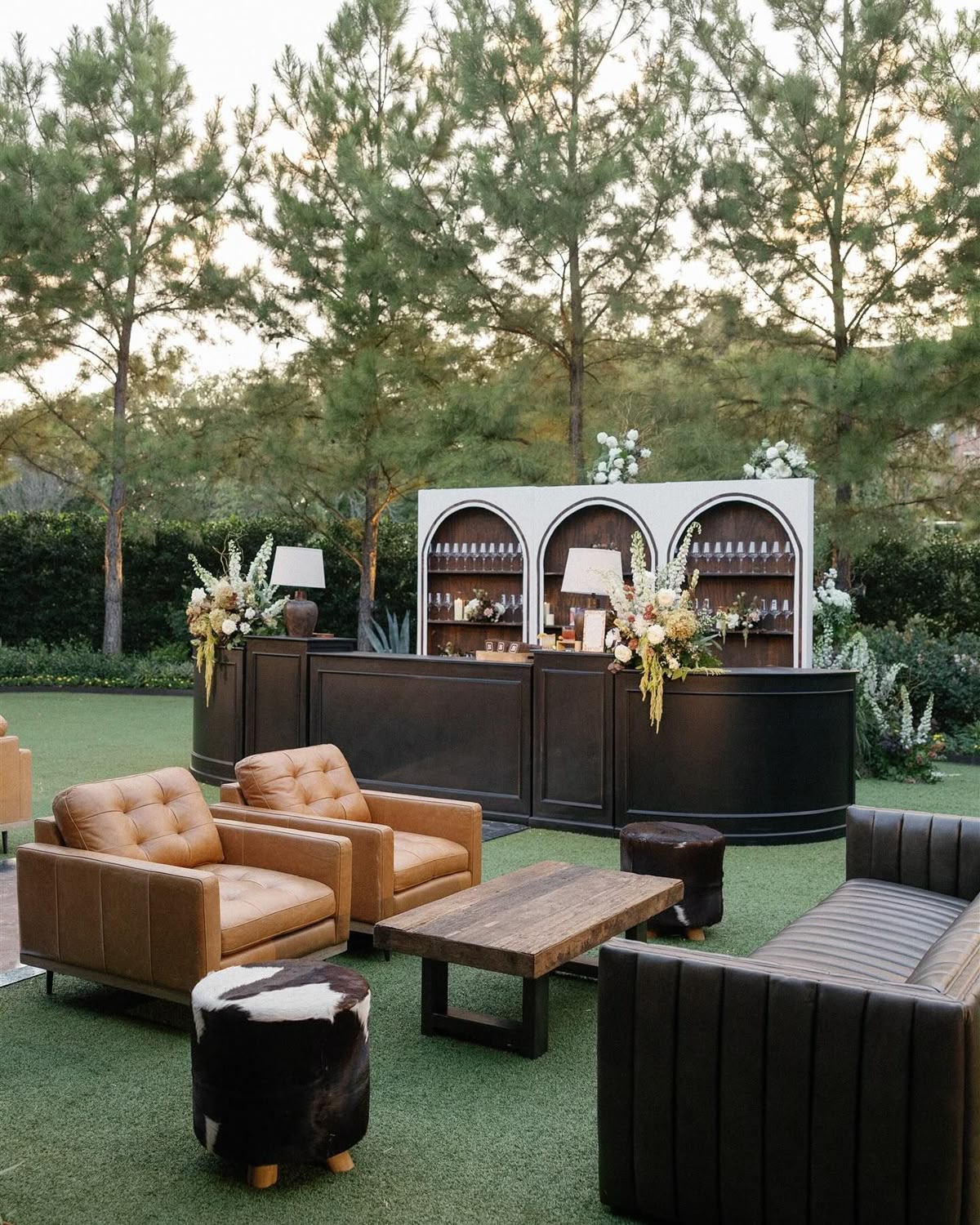
Tools That Make Bar Stations Work Better
Below are tools I consistently use to improve flow at bar stations. You don’t need all of them — even adding one or two can dramatically reduce congestion and hesitation.
- Tiered buffet risers – Improve bottle visibility so guests can scan options quickly.
- Slim glass beverage dispensers – Ideal for pre-batched cocktails or non-alcoholic drinks, reducing pour bottlenecks. I own these ones myself, and LOVE them!
- Acrylic label holders – Remove uncertainty and speed up decision-making.
- Small side tables or bar carts – Create essential exit space so guests can step away without blocking the line. I LOVE this one, it would be such a good fit for backyard or events where you want to roam with some sort of food offering.
- Matching glassware sets – Keep the station visually calm and intuitive
- Tiered bottle risers (to improve visibility)
- Matching glassware grouped at the station start
Screenshot