
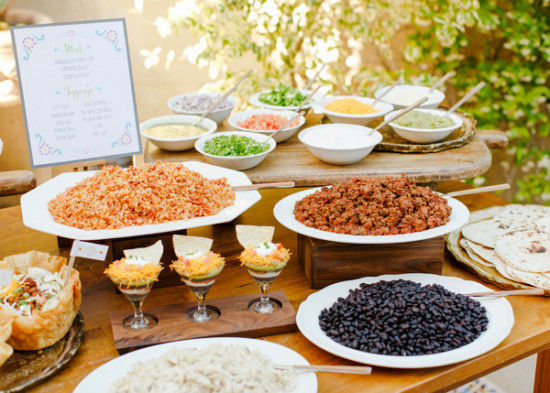
Corporate Event Food Station Ideas & Setup Guide
Why Corporate Guests Need Clarity More Than Choice
Corporate events require a different kind of design thinking.
This post may contain affiliate links. As an Amazon Associate, I earn from qualifying purchases.
Unlike weddings or private celebrations, corporate gatherings carry layers of social and professional navigation. Guests are balancing conversation, impression management, hierarchy, and time — all at once (it sometimes feels like modern-day keeping court; for our Bridgerton Fans).
The food station isn’t just a place to eat. It’s part of the event’s operational flow. You think I’m kidding? Check out where everyone is at the next event you attend. Is it the bar, the activations, or the food station? (If it’s not the food station, then it’s not interesting enough, just saying.)
Also, half the people there – at the food station – are there because they’re nervous, so if there was any time to shoot your shot, with someone you’ve wanted to talk to, that is the time (pro tip).
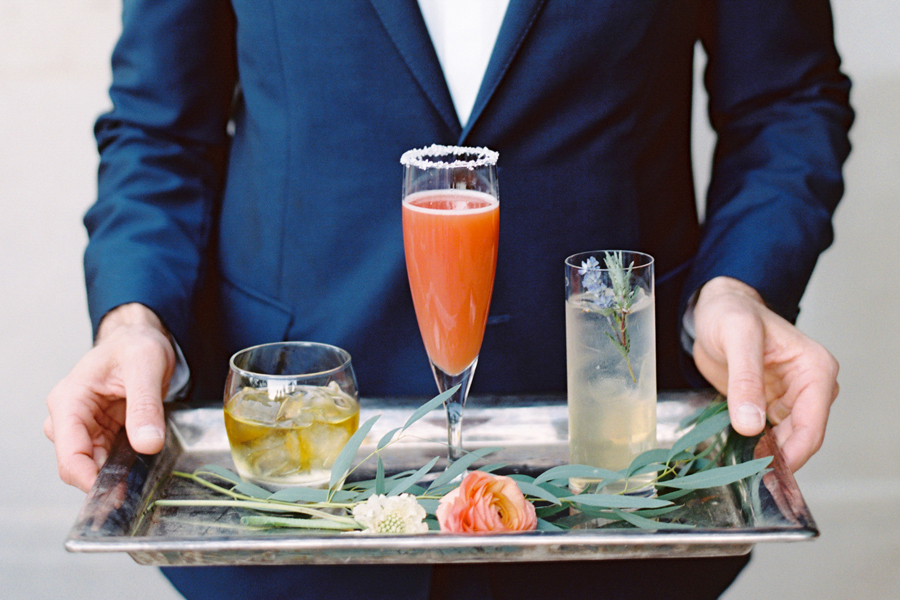
Nailed It.
When done well, it supports networking and movement. When done poorly, it creates hesitation, lines, and subtle stress.
This is how to design corporate food stations that feel seamless, professional, and easy to move through.
Food Stations as a Run-of-Show Tool
Before we go any further, let’s zoom out. Every corporate event has an energy arc. Yes, an energy arc. Walk with me, trust me on this, it’s real. And it’s where the magic happens at events (even corporate ones!).
Arrival → Settle → Build → Peak → Transition → Close.
Food stations don’t just live somewhere in the room — they live somewhere in that arc.
Placed at the right moment, they revive conversation and encourage movement. Placed at the wrong moment, they compete with programming, pull attention, and create unintentional pauses in your event flow. This isn’t about catering trends. It’s about operational rhythm. When you design a corporate food station, you’re not just choosing a menu — you’re choosing how the room will move.
Why Corporate Guests Need Clarity More Than Choice
Corporate guests are already managing:
-
Networking
-
Hierarchies
-
Client impressions
-
Time constraints
-
Social energy
At a corporate event, the food station should reduce decision-making — not add to it.
Too many options can feel generous in theory, but in practice, they slow people down. When guests hesitate, they:
-
Pause to read (make signage big enough, allergy info clear and consistent)
-
Step sideways to decide (something is off with your flow if they think they can step away, instead of fully engaging right away)
-
Block access unintentionally (maybe the way you designed the station should have a server, but you made it self-serve)
-
Create bottlenecks (Traffic flow, good traffic flow, for goodness ‘ sake – please create a floor plan with GOOD TRAFFIC FLOW!)
It might sound wohwoo, but clarity is more valuable than abundance.
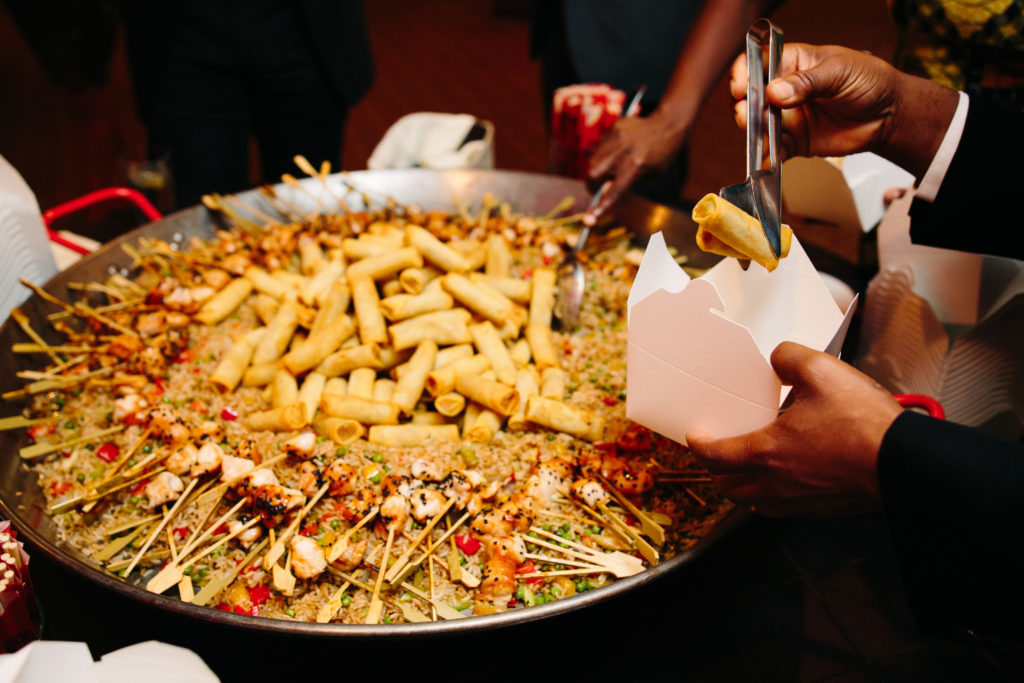
Where Food Stations Work Best in a Corporate Timeline
If your event includes:
• A keynote
• Panel discussions
• Awards
• Structured networking
• Sponsor activations
Then your food station should support those moments — not interrupt them.
Food stations work especially well:
• During natural transition windows (after a keynote, before a networking block)
• As a late-event energy revival
• Alongside cocktail hour to reduce initial awkwardness
• In between breakout sessions to guide movement
Food stations struggle when:
• They open during active programming
• They compete with a speaker
• They’re placed too close to the main focal point
• They become the loudest thing in the room
Corporate guests are already balancing social and professional navigation. The station should support that — not complicate it.
How to Design Corporate Food Stations That Feel Effortless
1. Reduce Decisions
Offer focused categories instead of overwhelming ingredient lists.
Instead of presenting every component individually and asking guests to assemble something from scratch, create structured stations that feel intuitive.
Here’s how that can look in practice:
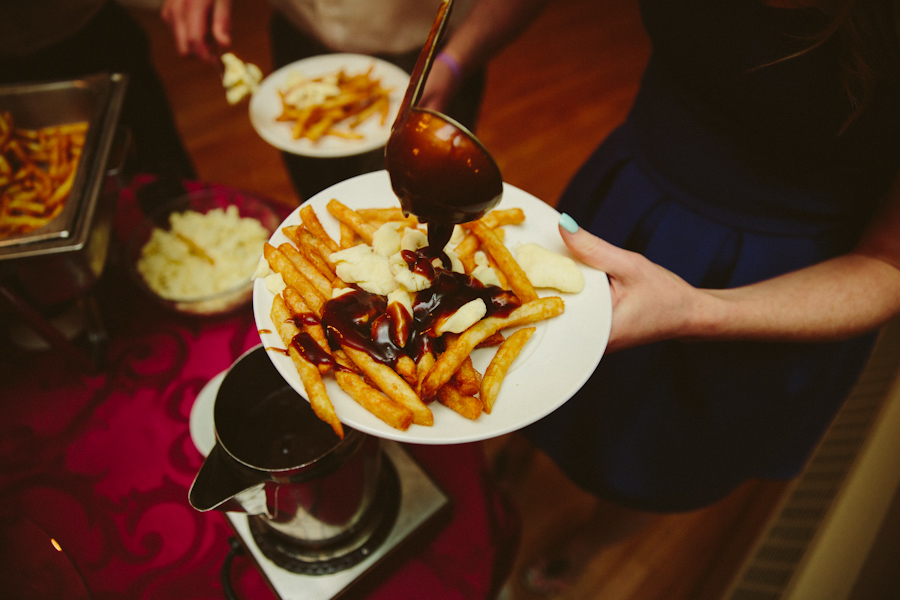
Example 1: Poutine Station
Instead of:
-
5 proteins
-
6 sauces
-
8 toppings
Try:
A clear poutine base with:
-
Fresh-cut fries
-
Cheese curds
-
Classic gravy
Then offer 4–5 clearly labeled add-ons:
-
Pulled beef
-
Sautéed mushrooms
-
Green onions
-
Crispy bacon
-
Peppercorn gravy alternative
Guests understand the structure immediately and can customize without standing there building a full recipe in their heads.
Example 2: Pasta Station
Instead of:
-
Multiple pasta types
-
Endless sauces
-
Long protein list
-
Assorted vegetables
Try:
Two clearly defined pasta builds:
• Creamy Parmesan Chicken
• Tomato Basil Vegetable
With:
-
One gluten-free option is clearly labeled
-
Chili flakes and grated parmesan at the end
Guests select a direction quickly rather than constructing something from scratch.
Example 3: Salad Station
Instead of:
-
20 loose toppings
-
8 dressings
-
No suggested combinations
Try:
Three defined salad styles:
• Classic Caesar
• Mediterranean Chickpea
• Harvest Greens with Apples & Feta
With dressings pre-matched to each option.
Guests can still customize, but they aren’t overwhelmed by pure choice.
When food stations feel structured, guests move confidently. When they feel open-ended, guests hesitate — and hesitation creates lines.
Corporate food stations work best when they feel intuitive at first glance.
2. Use Visual Consistency to Guide Behavior
Corporate environments respond well to visual order
(Think of the fun that is the Google office. You don’t need to be told it’s one of their offices; you still know. You can tell because the designer followed the branded visual order. That’s a large example for a food station blog post, but you get it right?).
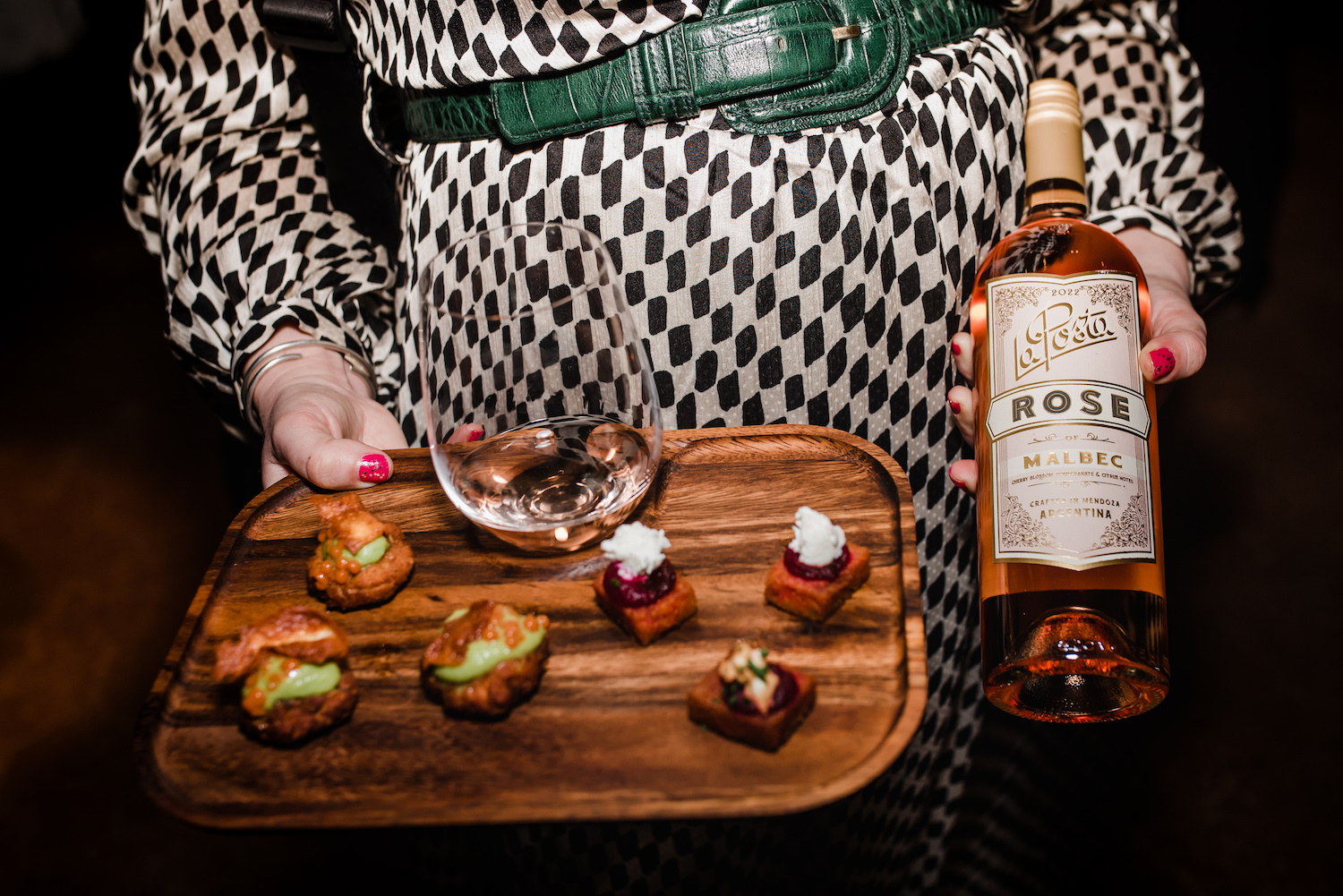
Matching trays, uniform serving pieces, and neutral linens create a sense of calm structure. That visual consistency communicates:
This is organized. You can move confidently.
Helpful tools:
-
Matching neutral serving trays
-
Neutral table runners to define the station footprint (or bold, if it anchors the space with that thread of the theme, but this isn’t a blog post about Event Design, is it 😉
-
Consistent platters that avoid visual clutter
3. Label Clearly — Without Overdesigning
Corporate food stations benefit from clean, minimal signage.
No decorative script fonts.
No overstyled frames.
No unclear labeling.
Use:
-
Simple menu signage holders
-
Clear typography
-
Straightforward dish names
When guests don’t need to lean in or ask for clarification, lines move faster.
Helpful tools:
-
Food tent label holders for dietary clarity
4. Separate Flow From Replenishment
One of the most common corporate mistakes is restocking directly in guest pathways – NO, stop doing this!!
Rolling carts allow catering teams to:
-
Replenish efficiently
-
Approach from the side
-
Avoid blocking guest flow
A neutral rolling cart blends into the environment while dramatically improving function.
5. Make Waste Management Invisible but Accessible
Overflowing trash disrupts a professional atmosphere quickly (we all know how Disney World takes out its trash, right? Through the BOTTOM!! The bottom opens up into a whole system of management down below. There is no taking the magic out of that place! Not if they can do anything about it!).
Guests should never search for disposal — but they also shouldn’t feel like they’re dining beside garbage.
Use:
-
Discreet waste + compost bins
-
Clearly labeled disposal areas
-
Placement slightly beyond the station exit
This keeps the station clean and movement uninterrupted.
Display & Product Tip: Discreet waste and recycling bins placed just beyond the station exit keep the space clean without disrupting flow.
Concrete Example: Duplicate Stations
If you’re expecting 80+ guests, one station is rarely enough.
Instead of:
One long station with 8 options
Try:
Two identical stations are on opposite sides of the room.
This:
-
Cuts lines in half
-
Reduces crowd density
-
Maintains consistency
-
Feels intentional rather than repetitive
Guests don’t experience redundancy — they experience ease.
The 80-Guest Rule
As a general guideline:
Once you cross 80 guests, assume one self-serve station will create a bottleneck. Even if the food itself is fast. It’s rarely the serving time that slows things down — it’s the pause.
Guests reading.
Guests deciding.
Guests stepping sideways.
Guests waiting for someone ahead of them to finish building a plate.
Two smaller, identical stations will almost always outperform one long, elaborate one.
Corporate events benefit from distributed density. Less crowd concentration. More ease. More professionalism.
Think of the Station as a Transition Device
In corporate events, transitions are everything.
How you move guests from:
Presentation → Networking
Networking → Dinner
Dinner → Awards
Awards → Close
Food stations can act as soft bridges between segments. They give guests something to do while the room resets. They prevent awkward standing moments. They buy time without feeling like filler. But only if they are positioned intentionally within your timeline. Otherwise, they become a distraction instead of a device.
The Corporate Rule: Structure First, Style Second
Corporate guests don’t need spectacle.
They need:
-
Clarity
-
Speed
-
Ease
-
Comfort
Display Tip: Chafing dishes maintain temperature while keeping the station layout clean and contained — essential for pasta, protein, or buffet-style builds.
The more organized your food stations feel, the more professional the entire event feels.
Often, it’s not the food that determines success — it’s the layout supporting it.
Tools That Help Corporate Food Stations Run Smoothly
Corporate food stations don’t require more décor — they require better structure.
Below are the tools I consistently use to improve flow, reduce hesitation, and support seamless service at corporate events. You don’t need everything listed here. Even adding one or two can noticeably improve how your station functions.
1. Acrylic Menu Sign Holders
Best for: Instant clarity
Clear, upright signage keeps dish names readable at a glance. When guests don’t need to lean in or ask questions, they move more confidently — and lines move faster.
👉 Ideal for station headers, build instructions, and dietary notes.
2. Buffet Label Holders
Best for: Reducing hesitation
Small, consistent food labels prevent uncertainty — especially around allergens or dietary restrictions. Clear labeling minimizes crowding at the front of the station.
👉 Use for ingredient lists and simplified dish names.
3. Tiered Buffet Risers
Best for: Improving visibility
Elevation allows guests to scan options quickly instead of leaning over trays. This small structural upgrade dramatically improves guest flow.
👉 Perfect for protein trays, sauce displays, or featured items.
4. Matching Neutral Serving Trays
Best for: Visual organization
Consistency creates calm. Matching trays keep the station cohesive and reduce the visual clutter that causes guests to pause and assess.
👉 Choose white, black, or neutral tones for corporate settings.
5. Stainless Steel Chafing Dishes
Best for: Controlled hot service
For pasta, protein, or buffet-style builds, proper containment maintains temperature and keeps the station layout clean and defined.
👉 Essential for events where food needs to hold for longer windows.
6. Slim Beverage Dispensers
Best for: Eliminating bottlenecks
Pre-batched beverages reduce congestion and eliminate on-demand mixing delays. Guests pour and move.
👉 Ideal for infused water, mocktails, or pre-batched cocktails.
7. Rolling Utility Cart
Best for: Discreet replenishment
Restocking from the side instead of through guest pathways keeps service seamless and prevents mid-event disruption.
👉 Use for backup plates, utensils, or fresh trays.
8. Neutral Table Runners
Best for: Defining the station footprint
A simple runner anchors the space and subtly guides guest movement without adding unnecessary décor.
👉 Helps visually separate multiple builds.
9. Discreet Waste & Recycling Bins
Best for: Maintaining professionalism
Waste should be accessible but not dominant. Slim bins placed just beyond the station exit keep the area clean without interrupting flow.
👉 Especially important for corporate sustainability goals.
A Quick Note
These tools aren’t decorative add-ons — they’re operational upgrades.
When food stations are structured with clarity and intention, guests move confidently, service feels calm, and the overall event experience improves without anyone noticing why.
If you’re planning a corporate event, start with structure — and let the right tools support it.
If you listen to nothing else, listen to this.
Corporate food stations aren’t about abundance. They’re about confidence. When guests can see clearly, move easily, and make decisions quickly, they relax. When they relax, networking improves. Conversations deepen. And the entire event feels more polished. Often, the difference between a chaotic corporate event and a seamless one isn’t the food — it’s the structure supporting it.
Food stations are operational tools. Design them like they matter. Because they do.




[…] you’ve read my piece on Why Food Stations Work, you already know: thoughtful layout changes […]